A Booking.com guest wants to book direct next time: is that allowed, and how do you handle it?
At check-out the guest says: "Next time we'll just book with you directly." What can you say, what exactly does Booking.com prohibit, and how do you make sure that second booking really arrives commission-free? The anti-circumvention rules, what you may do with guest data, and a concrete plan from check-out to repeat booking.
Share on LinkedIn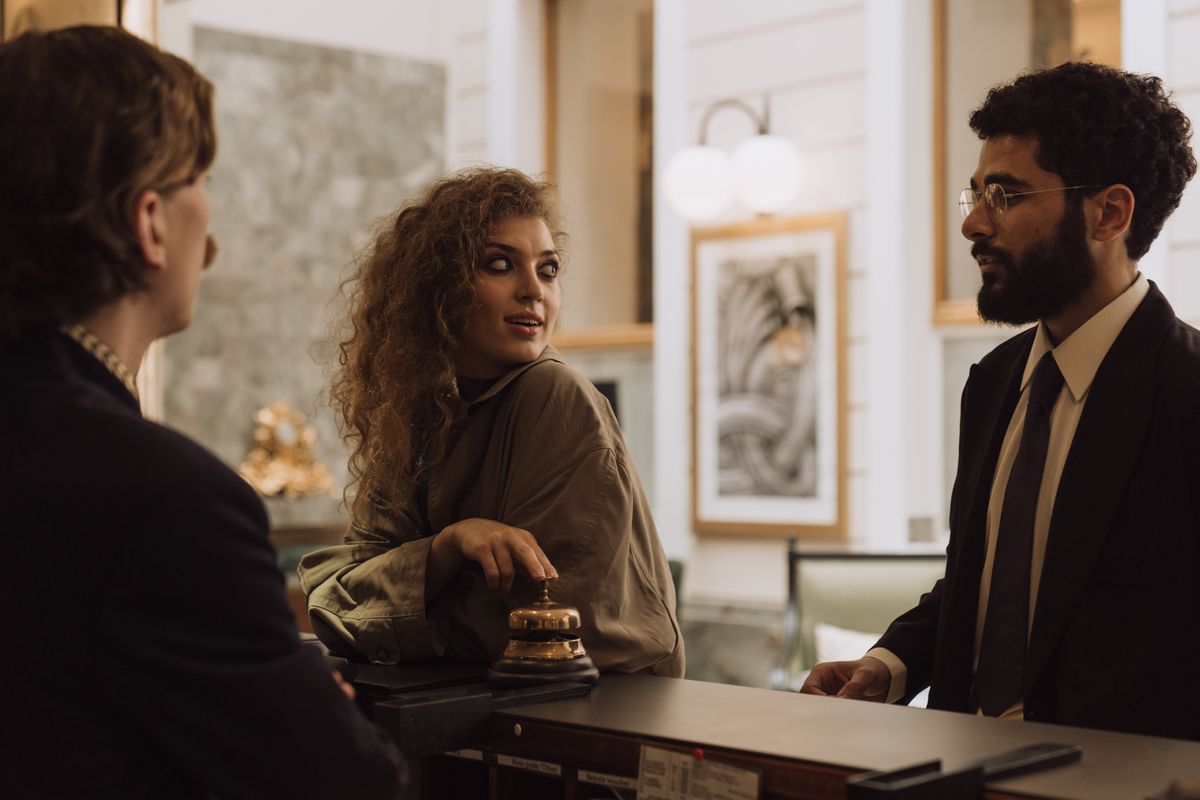
It is one of the nicest sentences you can hear as a host. The guest is standing in the hallway with their suitcase, thanks you for the stay and says: "Next time we'll just book with you directly, then you won't have to pay that commission." Many hosts have no idea what they are allowed to say at that moment. Can you hand over a business card? Promise a discount? Write down the email address? Or are you risking your listing on Booking.com?
The short answer: that second booking is entirely yours. Only the road towards it has a few rules. This article lays them out and gives you a step-by-step plan you can apply tomorrow.
What Booking.com actually prohibits
The accommodation terms contain a clause against what Booking.com calls "circumvention". The core is simple: a booking that came in through the platform must not be handled outside the platform. In practice that means:
- You may not ask a guest with an active Booking.com reservation to cancel and rebook directly, not even with a discount as bait.
- You may not approach the guest before arrival with the message "book with us, it's cheaper". The contact details you get through the platform are meant for handling that one reservation: practical questions, arrival time, directions.
- You may not simply drop the guest profile Booking.com shows you into your newsletter. You received that data as a processor for that booking, not as an owner for your marketing.
Violations lead in practice to a warning, and on repetition to reduced visibility or the closure of your listing. It is not a theoretical risk; Booking.com actively monitors it, among other things through guest complaints and through guests who visibly stay at the same property after a cancellation.
Do read the current version of the terms yourself in your extranet; wording changes now and then. But the gist has been the same for years.
What Booking.com does not prohibit
Just as important is what is not in there. Booking.com has no exclusivity over your guests. Once the stay is over, the guest is simply someone you know and who knows you. What is allowed:
- A guest who comes back on their own initiative via your website, by phone or by email books directly. Nothing is owed on that.
- Collecting your own guest data at check-in. As a host in Belgium you are required to keep a guest register, and you may ask for an email address while doing so. For marketing you need separate, clear consent, but you can simply ask for it at that moment: "May we occasionally send you our offers?" A checkbox on the online check-in form is enough. You then collected that data yourself, with your own consent, and it is yours.
- Being visible as a brand. Your name on the towels, a card with your website on the bedside table, a wifi landing page that links to your site. None of that is circumvention.
- A lower price on your own website. Since Booking.com was designated a "gatekeeper" in the EU, the platform may no longer demand rate parity. You are free to be cheaper on your own site than on Booking.com. More on that in our article on rate parity.
So the dividing line is not "Booking.com guest or not", but "is it about the current booking or a future one?" The current booking stays with the platform. Everything after that is open ground.
The answer at check-out
Back to the guest in the hallway. What do you say?
Keep it simple and honest: "We'd love that! You'll find us on our own website, where we're always a little cheaper than on the platforms. If you leave your email address, we'll send you a note once a season with our dates and offers."
Three things happen in that one sentence. You name your own channel. You give a reason to use it (the price). And you politely ask permission for the only thing you really need: a way to reach the guest again.
What you don't do: change the current invoice, settle in cash "outside Booking" or ask the guest to cancel the active reservation. That stay has already been booked, paid and commissioned. Leave it that way.
From check-out to repeat booking: the step-by-step plan
A guest's good intention is not yet a booking. From our own experience: without a system, most "next time direct" guests still come back through Booking.com a year later, simply because it is the first app they open. This is what does work.
1. Collect the address at the right moment. At online check-in, before arrival, the share of guests who leave an email address plus a marketing tick is highest. They are busy with practicalities and not yet with leaving.
2. Tag the guest in your PMS. A label such as "wants to return direct" takes two seconds and lets you email precisely that group later. In BedFlow PMS you see the full history for every guest: which channel, which room, how many nights, what was paid.
3. Send a thank-you after a week. Short, personal, no selling. A link to your website is fine; a discount code not yet. You want the guest to remember your name, not to feel worked on.
4. Email at the moment they make plans. For a Benelux B&B that is usually January (summer), August (autumn break and Christmas) and a month before long weekends. One email each time, with concrete dates that are still available and a discount code for direct bookings that only works on your own site.
5. Make booking direct easier than the platform. This is the step most often forgotten. A guest who opens your email must be able to pick a room, pay and receive a confirmation in three clicks. A contact form saying "we'll email you the availability" loses to the Booking.com app, however good your intentions. A booking engine on your own website with online payment is the minimum requirement.
6. Measure it. Every quarter, check what share of your bookings arrives directly and how many of those are returning guests. If that percentage isn't rising, it is almost always step 5.
What it is worth
Run the numbers for your own situation. An average €300 booking through Booking.com costs you roughly €45 to €54 in commission, depending on your rate. A returning guest who books direct costs you the time of one email and perhaps a 10% discount: €30. The difference looks small per booking, but returning guests often stay longer, complain less and need less explaining. Over a year with a few hundred bookings, that is the difference between "the commission is a cost" and "the commission is a marketing budget I manage myself".
In short
- Leave an active Booking.com booking alone: no cancelling, no redirecting, no settling outside the platform.
- Guest data from the platform is for that one booking. Collect your own address with your own consent at check-in.
- After the stay the guest is simply your guest. Booking back directly is allowed and cheaper for everyone.
- Rate parity no longer applies in the EU: your own site may be cheaper.
- The difference between a good intention and an actual repeat booking is an email at the right moment and a booking engine that works in three clicks.
Want to recognise returning guests, tag them and reach them at the right moment, with a booking engine where they can pay straight away? Try BedFlow PMS free for 30 days, no card details required. Rates are on the pricing page, and the documentation explains how to set up online check-in with marketing consent.
30-day free trial, no credit card. We migrate your MyTourist or other PMS data with you.