Group bookings in your B&B: renting out several rooms at once without the chaos
A group of friends wanting four rooms, a family celebration asking for the whole house: group bookings are your biggest bookings and your biggest risk. How to hold rooms while a quote is open, what deposit and cancellation terms to agree, how to invoice as one bill or per couple, and why exclusive use needs its own price.
Share on LinkedIn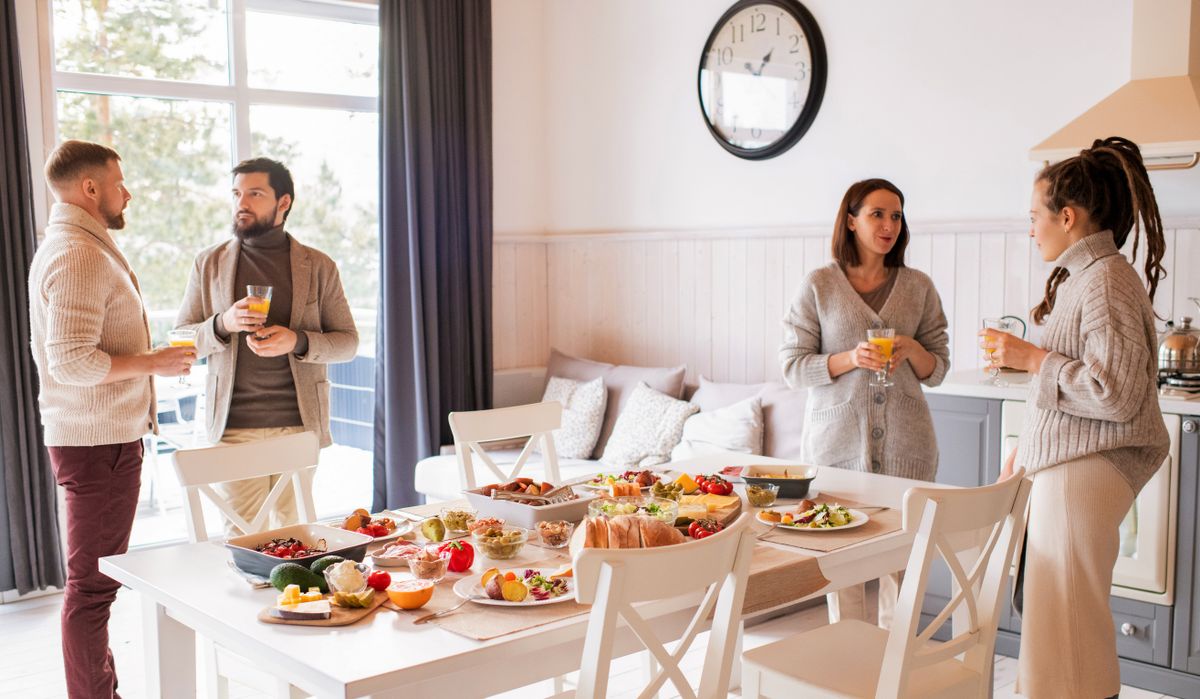
"Hi, there are five couples of us and we're looking for five rooms for the weekend of 26 September. Is that possible?"
That's instantly the biggest email of your week. Five rooms, two nights: more revenue in one go than you normally book in ten days. But it's also the booking most likely to go wrong. One contact person decides for ten people, half of them still need to "check with the others", and meanwhile your rooms sit in a grey zone: not booked, but you no longer dare give them away.
This article is about handling group enquiries so they turn into revenue instead of headaches.
Why a group booking isn't five ordinary bookings
On paper it's the same: five rooms, two nights. In practice it differs on three points.
Everything hangs on one decision-maker. If that person drops out, it isn't one room that frees up — it's your whole house. With ordinary bookings your risk is spread across five independent guests; with a group it's concentrated in one.
The decision takes a long time. A couple books in five minutes. A group of ten needs a week to agree on a date — and expects you to hold those rooms in the meantime.
They cancel later and harder. A group cancellation two weeks before arrival leaves a hole you can barely refill with individual bookings, certainly not on a weekend that's fully booked everywhere else by then.
None of that is a reason to turn groups away. It's the reason to agree different terms than for an ordinary booking.
Step 1: hold the rooms the moment you send a quote
The classic mistake: you send a price proposal, leave the calendar open, and three days later someone books through Booking.com exactly the room the group needs. Now you get to choose who to disappoint.
So put the requested rooms on hold as soon as a quote goes out — with an expiry date attached. Seven days is reasonable: long enough to consult, short enough not to hold your weekend hostage. State that deadline explicitly in your email: "I'm holding these five rooms until Friday 5 September. Without a deposit I'll release them after that."
Important: that hold has to carry through to your sales channels, otherwise you're only blocking your own diary while the OTAs happily keep selling. That's exactly the mechanism behind overbookings — with a group the damage is simply bigger.
Step 2: deposit and stricter cancellation terms
With a group, a deposit isn't distrust — it's standard practice. Anyone who has ever booked a function room or a restaurant for twenty people knows the drill.
A workable model:
- 30% on confirmation, which is also the moment the hold becomes a real booking. No deposit, no booking.
- Balance 30 days before arrival, or on arrival if you prefer smaller amounts.
- A separate cancellation window: free cancellation up to, say, 30 days before arrival, after which the deposit is retained. Your usual 48-hour terms simply don't hold up here.
- Handle partial cancellation explicitly. What if one of the five rooms falls away? Agree that the number of rooms is fixed X days in advance, otherwise you still charge for the last room.
Put that in one short paragraph in your confirmation email. Not in legal jargon — in plain language, so the contact person can forward it to the rest of the group. How to build your terms in general is covered in our article on setting cancellation policies.
Step 3: one invoice, or everyone their own share?
This question always comes up afterwards, so ask it up front. There are only two scenarios:
- One payer. The organiser pays everything and gets a single invoice — typical for a family celebration, a team weekend or a booking in a company name. Administratively the simplest.
- Each couple pays their own room. Then you have five payments, five invoices, and one contact person acting as the point of contact. In that case do collect a name and email address per room, or you'll be puzzling out who sleeps where on arrival day.
What you don't want is the in-between model where the organiser "will sort it out with the others" and you end up chasing three missing payments. Always have one person pay the deposit, however the rest is settled. An online payment link turns this into one click instead of a series of transfers you have to track.
Step 4: price it properly — including exclusivity
Two traps.
Don't give an automatic group discount. A group booking five rooms is booking your best weekend nights. That's precisely your scarcity — there's no commercial reason to sell it cheaper. If you want to give something, give something that costs you little: a bottle of cava on arrival, a late breakfast, free parking.
Price "the whole house" separately. If the group wants exclusive use — no other guests on the premises — you're not selling five rooms, you're selling your entire business for two days. That justifies a minimum amount, even if they only fill four of your five rooms. Combine it with a minimum length of stay of two nights at weekends, so you don't block a Saturday for a single night.
Step 5: the practical part
Groups behave differently in the house. Arrange in advance:
- Breakfast. Ten people at the table at once is a different operation from ten people spread over ninety minutes. Agree one sitting.
- House rules and noise. A stag weekend and a couple looking for peace in the same corridor is asking for a bad review. Be honest about this before the booking, not after.
- Arrival. Ten people turning up at 10pm after dinner out: make sure your check-in process can cope.
- Deposit for damage. For parties or exclusive use, a security deposit is reasonable — it works the same as with an ordinary booking.
Where BedFlow PMS makes the difference
In BedFlow PMS you put several rooms for the same period into one booking, with one contact person and still a correct split per room. The rooms go to blocked immediately, and that block carries through to all your sales channels — so no double booking while your quote is still open.
You set a deposit and cancellation rule on that booking specifically, without touching the standard rules for the rest of your guests. You request the deposit with a payment link; the rest follows automatically. And when invoicing you choose: one invoice for the organiser, or a separate invoice per room. Everything sits on one screen, including on arrival day. The details are in the documentation.
In short
- A group booking is one risk, not five spread risks — treat it that way.
- Hold the rooms the moment you send a quote, with a hard expiry date.
- Always ask for a deposit and agree a longer cancellation window.
- Decide up front who pays: one invoice or per room, never "the organiser will sort it".
- Don't discount your scarcity automatically; price exclusive use of the whole house separately.
- Sort out breakfast, noise and arrival in advance — that's where groups go wrong, not on price.
Want to take group enquiries without juggling holds and loose payments? Check the pricing, read the documentation or try BedFlow PMS free for 30 days — no credit card required.
30-day free trial, no credit card. We migrate your MyTourist or other PMS data with you.