An EV charger at your B&B: what does a charge cost you, and how do you bill it?
More and more guests arrive in an electric car and ask whether they can charge. An extension lead to a wall socket is not the answer. What a charge really costs you, three ways to bill it, and how to get the amount onto the booking and the invoice.
Share on LinkedIn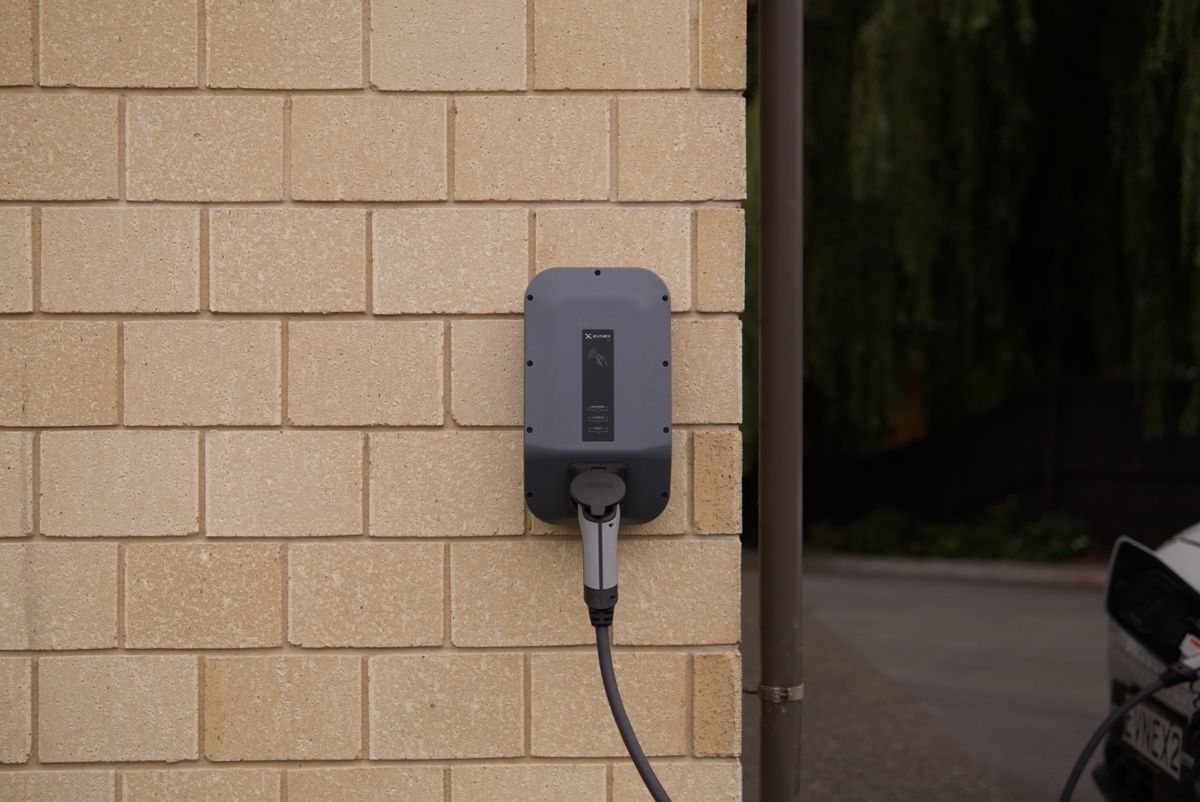
By now almost every host gets the question: "We're coming in an electric car — can we charge at your place?" Often before the booking, in an email or through the contact form. And the answer regularly decides whether that booking happens at all.
The easy answer is an extension lead to the socket in the garage. That is precisely the answer that costs you the most money and the most risk. Below: what a charge really costs you, why an ordinary socket is not a solution, and how to pass the cost on fairly without it becoming an argument at the breakfast table.
Why this is more than a favour
Three reasons to take it seriously.
It has become a search filter. On Booking.com, Airbnb and Google a traveller can filter for places with charging on site. Anyone using that filter does not see you if you have not ticked the facility. That is not a marketing story, that is visibility you are simply leaving behind.
It attracts a specific audience. People driving electric on holiday plan their route around charge points. An address where the car quietly fills up overnight is half a reason to book — and these tend to be the guests who stay two or three nights instead of one.
It is one of the few extras that requires no work. Breakfast has to be cooked, bike hire has to be maintained. A charge point does its job while you sleep.
What a charge actually costs you
This is where it usually goes wrong, because hosts think in terms of "a bit of electricity".
An average electric car takes on 30 to 50 kWh over an overnight stay — half to three quarters of a battery. Do the sum: at an all-in grid rate of roughly €0.35 per kWh that is €10 to €18 per night, per car. With two charging guests over a weekend you are quickly at the cost of breakfast for four.
That is not a disaster — it is simply a cost you need to know. The problem starts when you do not know it and offer "free charging" while picturing a domestic socket, with a car on the other end drawing 40 kWh.
Two things tip the sum either way:
- Your own solar panels. A car charging between 11am and 4pm costs you almost nothing in summer. A car plugged in at 7pm charges off the grid. If you have panels, when the charging happens matters more than how much.
- Your capacity tariff. In Belgium your grid operator bills on your monthly peak. An 11 kW charger kicking in while the oven and the dishwasher are running lifts that peak — and you pay for it for twelve months. Chargers with dynamic load balancing exist precisely to prevent this.
Why that socket is not the answer
An ordinary socket delivers about 2.3 kW. Over a twelve-hour night that is some 25 kWh: just enough to keep most guests happy. Tempting, then. But:
- A domestic socket and its wiring are not designed to run at full load for hours on end. Overheated sockets and degraded extension leads are a real, documented fire risk — and your insurer knows that risk too.
- You have no measurement at all. You do not know whether that guest took 8 or 38 kWh, so you cannot bill it correctly.
- You cannot control it. No load balancing, no solar steering, no grip on your peak.
A simple charge point with its own meter solves all three at once. It does not need to be a fast charger: 7.4 or 11 kW is plenty for an overnight stay, and it is both safer and cheaper than the cable through the cellar window.
Three ways to bill it
1. Included, with a cap. "Charging included, up to 20 kWh per night." You stay hospitable, your cost stays predictable, and you can list the facility on the OTAs. Works well if you have solar panels and are mainly after the search filters.
2. A flat amount per night. Say €12 per night per car, unlimited. Easy to explain, easy on the invoice, no argument about meter readings. The downside: the guest taking 15 kWh overpays, and the one with a large SUV underpays. For most small properties that is a fine trade.
3. Billing per kWh. You read off the charging session and put the consumption on the bill. The fairest option, and the only one that holds up when your guests turn up in very different cars. It does require that you can add that line to the booking afterwards — reading, rate, amount — and that the guest knew your rate in advance.
Whatever you pick: communicate the amount before arrival, not at check-out. A €30 surprise on the final bill costs you a star in your review, and that is a far more expensive invoice than the electricity.
Two more things people trip over. A charging session is not accommodation: it does not automatically follow the VAT rate of your overnight stay. Put it on the invoice as a separate line and have your accountant confirm the applicable rate once — after that it is settled. And if a business guest wants to reclaim the charging cost, that line has to be separately visible, with consumption and amount, on an invoice in the company's name. See business guests and invoices in a company name.
Practically, in your booking flow
What usually breaks is not the technology but the admin: the charging session lives in a text message, a note by the keys or the host's head — and not in the booking.
In BedFlow PMS you set "EV charging" up as an extra service on the property. You decide whether it is an option the guest ticks while booking (priced or free), a fixed cost per night, or a line you add afterwards with the actual consumption. That line flows automatically into the confirmation email, the bill and the accounting link — so no more separate spreadsheet of "who still owes me for electricity". You use the same structure for other upsells and for cleaning fees; the documentation covers making an extra service optional or mandatory.
Finally, do not skip the boring part: actually tick the facility in your OTA profiles. A charge point nobody can see brings in exactly zero extra bookings.
In short
Work out once what a night of charging costs you — 30 to 50 kWh is a realistic estimate — and then decide deliberately whether you give it away, cap it or bill it. Do not do it with an extension lead: a proper charge point with metering is safer, measurable and controllable. Communicate your rate before arrival, put the cost on the invoice as its own line, and make sure the facility appears in your OTA profiles, because that is where your next guest's search starts.
Want extras like EV charging to land neatly on the booking and the invoice, without side lists? Try BedFlow PMS free for 30 days — no credit card required. The pricing is right there on the site.
30-day free trial, no credit card. We migrate your MyTourist or other PMS data with you.